The Port of Tyne
nurdle spill
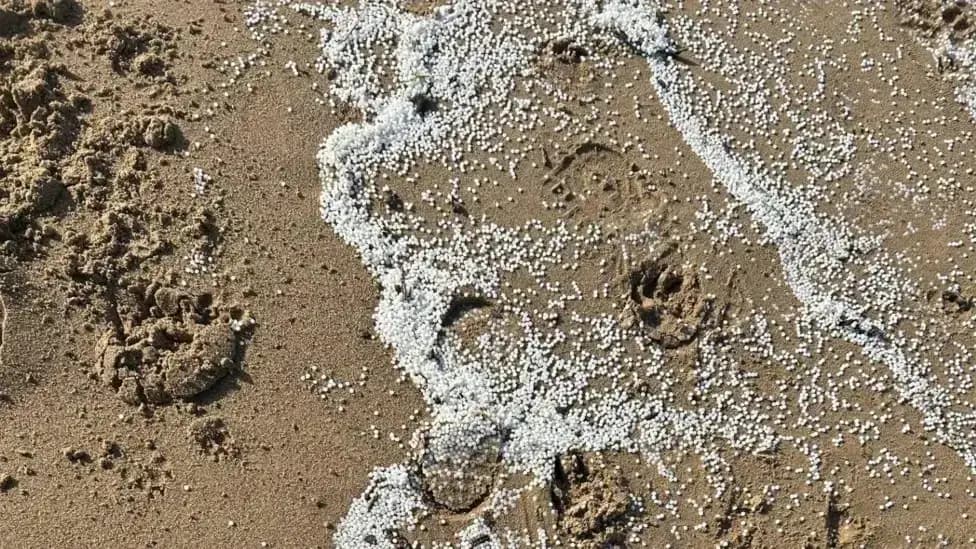
On 19 July 2026, following a collision between two vessels in the Port of Tyne, an estimated 17 tonnes of plastic pellets—known as nurdles—entered the River Tyne. Around one billion of these tiny plastic pellets have since washed up along beaches across the North East, prompting a huge community-led clean-up effort.
Community response
How to help
Take action
Join a beach clean
Join the community WhatsApp group for beach-specific updates, or head down to help.
Community advice: collect in bin bags and place next to the council bins. Large mesh bags work well with shovels; where appropriate use a dustpan and brush. See Beach Cleanup page for more info on equipment and methods.
Sign the open letter
Call on the Port of Tyne to authorise trained volunteers to help recover nurdles at the source.
Write to your MP, councillor and the Mayor
Contact all three. Ask for a large-scale effort at the right tide times to collect nurdles. People are needed specifically Monday and Tuesday for a large-scale cleanup — and the council should respond with numbers and the right gear.
Always include your name and address at the top.
Residents in North Tyneside constituency can write to MP Alan Campbell, or find your local councillors
Show email template for councillors & MPs
EMAIL TEMPLATE FOR COUNCILLORS & MPs
Subject
URGENT: Port of Tyne Nurdle Disaster — Inadequate Official Response & Critical Action Needed
Dear [Name of Councillor / MP], I am writing to you as a constituent residing in [Your Town/Area] to express my deep frustration regarding the major plastic spill originating from the River Tyne. Following the vessel collision, over 24 tonnes—an estimated 1 billion raw plastic pellets ('nurdles')—were released into our marine ecosystem. As reported by the BBC ("Plea for action over billion plastic pellets washed up on beaches"), and as witnessed firsthand by community members on the ground, the current response from local councils and national agencies is drastically insufficient. What are our local councils and responsible agencies actually doing right now? The reality is that official action remains largely passive, reliant on monitoring and minimal surface measures, leaving unpaid volunteers to shoulder the physical burden of Northern Europe’s largest microplastic disaster. Official Notice to Mariners logs and emergency records from the Port of Tyne expose severe systemic failures in the disaster response: Timeline Delays & Administrative Lag: Significant operational gaps occurred between initial detection and deployment. Critical hours were lost to administrative approvals, risk assessments, and multi-agency coordination delays while billions of pellets drifted unchecked. Reactive Containment: Rather than deploying immediate, large-scale booming systems at the river source, the response was reactive. Physical barriers arrived days late—long after ocean currents and winds had dispersed the plume across vast coastal stretches. Resource & Logistics Constraints: There was a lack of pre-positioned, industrial-scale microplastic recovery equipment (such as specialised sifting or vacuum units). Communication Bottlenecks: Fragmented information flow between initial observers, local authorities, and central environmental agencies severely delayed the escalation required for a disaster of this scale. 1. It is critical to understand the biological timeline of this spill: while raw plastic pellets are not inherently toxic when first dropped, they can become toxic the longer they remain in the water. Toxin Accumulation Over Time: As floating nurdles drift, their hydrophobic surfaces act like sponges, absorbing persistent organic pollutants (POPs) and heavy metals from seawater. Pathogen Reservoirs: Over weeks and years, nurdles develop a biological coating (biofilm or "Plastisphere") that could harbour dangerous human pathogens, including E. coli and Vibrio species, creating a growing public health hazard on public bathing beaches. Seabed Burial: As bio-fouling increases their weight, wave action eventually sinks these pellets into seabed sediments, where they cause permanent ecological damage to benthic life that is virtually impossible to fix. Indefinite Persistence: Unlike oil spills, which eventually dissipate or biodegrade, plastic pellets stay in nature indefinitely, continually breaking down into microplastics. 2. What Is Being Done Right Now Is Not Enough A few static booms placed days late on the river do not stop the continuous re-deposition of nurdles with every high tide. Councils cannot rely on residents spending hours on their knees with kitchen sieves to solve an industrial marine disaster. We need active, high-capacity estuarine recovery machinery, skimmers, and specialised containment working directly in the river mouth now before these pellets permanently embed into our coastal ecosystems. 3. Urgent Demands for Local & Parliamentary Action I call on you to urgently demand the following from the Councils, Defra, the Environment Agency, and the Maritime and Coastguard Agency (MCA): Escalate River-Source Recovery. Provide Full Support for Volunteer Logistics Enforce Full Corporate Liability & Legislative Reform Volunteers cannot be expected to carry the burden of a major industrial marine spill while official agency responses remain stalled in administrative delay. I look forward to hearing what direct steps you are taking to hold agencies accountable and escalate recovery efforts immediately. Yours sincerely, [Your Full Name] [Your Full Postal Address & Postcode] [Your Phone Number - Optional]Sign zero plastic pellet loss petition
Help keep this issue on the national agenda by signing the official UK Parliament petition.
Update
North East volunteers left to fill the gap as official clean-up scales back and nurdle pollution reaches Yorkshire coast
One month after the Tyne spill, volunteers say the official clean-up is scaling back as nurdle pollution is confirmed as far south as Marske-by-the-Sea — around 45 miles of coastline.
Scientific Briefing for Volunteers
Environmental risk
The environmental concern is high.
Nurdles: absorb oil, absorb diesel residues, absorb persistent organic pollutants, adsorb heavy organic contaminants.
Marine organisms mistake them for food.
Affected wildlife may include: seabirds, fish, crabs, shellfish and marine mammals indirectly through the food chain. [1]
Potential impacts include: Digestive blockage, starvation, reduced reproduction, transfer of pollutants through the food web and fragmentation into microplastics.
These long-term ecological effects are why nurdle spills are treated as major environmental incidents.
Why is this considered a serious environmental incident?
Although each pellet is tiny, the scale is enormous:
- Approximately 1,000,000,000 pellets. Roughly 17 tonnes.
- Capable of spreading over many kilometres of coastline.
- Extremely difficult to recover completely.
- Marine scientists regard nurdle spills as one of the most persistent forms of plastic pollution because the pellets continue circulating between beaches and the sea for years.
Key message
This incident is not simply a litter problem. It is a significant marine pollution event resulting from a shipping accident. Every properly collected bag of pellets helps reduce the amount available to enter the food chain or break down into microplastics.
Why were volunteers initially advised not to collect them?
Early in the response, authorities needed to:
- Assess the extent of contamination.
- Preserve evidence for the investigation.
- Avoid spreading pellets inadvertently.
- Prevent damage to sensitive habitats.
- Establish safe disposal procedures.
As organised clean-up plans developed, volunteer participation became more structured in many areas.