Scrape nurdles up from wet sand
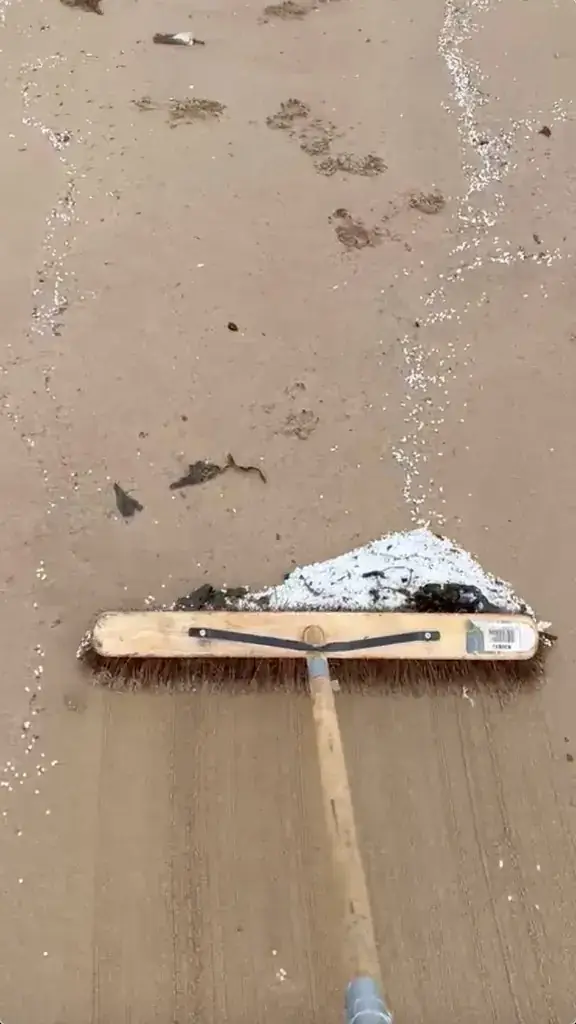
- Use a flat broom, back of rake or even plank of wood
- Carefully scrape up the lines of nurdles
- Sweep up nurdles and place in labelled bin bag
North Tyneside · Community response
Nurdle Hub NECommunity-run · not an official council or emergency service
Important safety / current guidance
Guidance can change quickly. Check the latest updates before heading to the beach, and avoid treading nurdles deeper into the sand.
Whatever you have available.
Avoid treading nurdles into the sand as best you can.
Get out after high tide, every day if you can, and focus on clearing nurdles left at the high tide line.
DON'T STEP ON THE NURDLES! (We can't emphasise this enough)
Wear gloves (and wash your hands when you're finished).
Use sweeping brushes and/or dustpan and brush to collect the nurdles (see tips on techniques below).
If possible/appropriate, leave the filtering to more experienced volunteers and focus on collecting.
Bag nurdles into heavy-duty bin bags, label with 'volunteer collected', secure and leave at closest council-recommended collection point. (Report bags that are not at a collection point.)
Do not overload the bags - wet sand is heavy, and will stretch even the strongest mesh. Better to do two trips with smaller loads down to the waterline, than one trip which stretches a bag out.
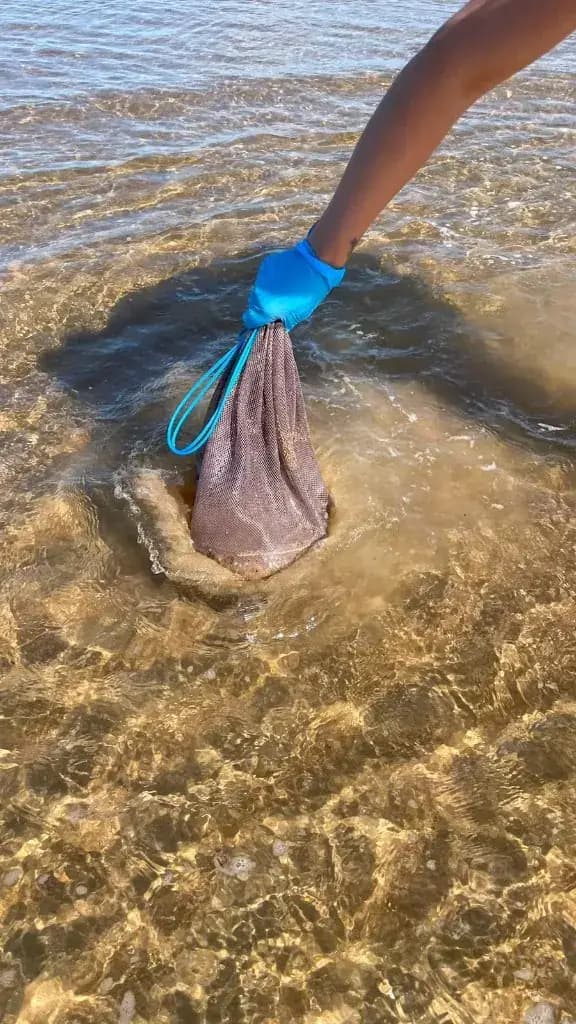
Use small bags for carrying directly into the surf, bigger bags for fitting over a trug or bucket.
If you find Nurdles are passing through mesh bags, use those bags for seaweed capture instead, stretched over a bucket


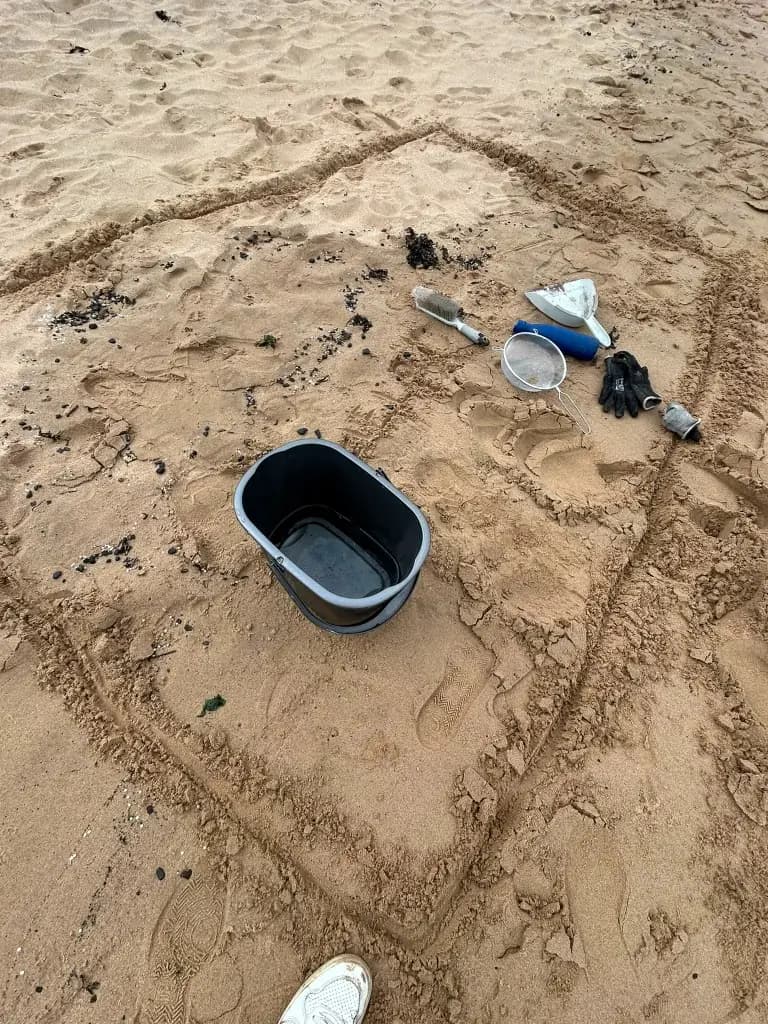
Draw a square in the sand to work on, complete it, move on and repeat. Keeps the task bitesize and measurable.
This quick video provides guidance on sewing mesh bags to filter out the sand and seawater, leaving the plastic pellets in the bag.
When you stop for a brew, break, or to head home, hand hygiene really matters. Hand gel is handy in many situations, but on its own it is not enough for this kind of clean-up. Good old-fashioned soap and clean running water are still the best option because they actually lift away sand, silt, tiny plastic fragments, grease, oils and germs. If you can, use the beach facilities, clean tap water and soap, and wash your hands properly before eating, drinking, smoking, touching your face, or leaving the site.
It removes dirt and silt: Soap and running water physically lift and rinse away sand, mud, tiny plastic fragments and contamination. Hand gel cannot do that.
Soap is king:
When collecting nurdles, please help minimise disturbance to wildlife and coastal habitats by following these guidelines:
Environment Agency advice has been not to touch, which is why no organisation can officially lead. Community volunteers are still collecting at their own discretion. Check weather and tides, and leave if conditions feel unsafe.
Community organiser advice is to collect in heavy-duty bin bags and place them next to the council bins. Make sure the bags are clearly labeled as having been volunteer collected. Join the WhatsApp group for the latest method discussion.
There is an unofficial request for help specifically on Monday and Tuesday. Check tide times and the WhatsApp group before you travel.
Write to your MP, your councillor and the Mayor — all three. Ask for a large-scale tide-based cleanup with proper numbers and equipment. Include your name and address at the top.
No organisation is officially leading this while EA advice restricts action. This is a community volunteer effort. This page is not an official council or emergency-service site.
Live tide times from tidetimes.co.uk.